Hyperactivity and agitation in children: Is there a natural approach?

Faced with growing challenges related to child development, attention and concentration have become central concerns of healthcare and support professionals.
These psychological functions are fundamental to a child’s cognitive, emotional and social development. They condition not only academic learning, but also behavioral regulation and the social interactions quality. More broadly, they contribute to the child’s personal development, sometimes described as turbulent.
When these faculties are impaired, difficulties can arise in daily life, both for children and those around them, with repercussions on family life, schooling and emotional well-being, making these manifestations a genuine public health issue. In this context, understanding the mechanisms involved, exploring possible support levers and focucing on management through nutritional solutions provides a better understanding of these challenges.
Better understanding instability and attention difficulties in children.
Instability and agitation: definition and key mechanisms.
Children sometimes present attention difficulties, motor agitation and impulsive behaviors. These manifestations can notably be explained by neurobiological imbalances, particularly in the synthesis and transmission of certain neurotransmitters.
Among these, dopamine plays a central role. It is directly involved in motivation, attention and behavioral control. Other chemical messengers are also implicated, such as serotonin, which also helps regulate attention, mood and impulsivity.
Attention and emotional balance in young people: key figures
According to Santé Publique France, 13% of children aged 6 to 11 in primary school present psychological difficulties with an impact on their daily life, including emotional disorders, oppositional behaviors and concentration difficulties. (1)
Among adolescents, one out of four is suspected to be experiencing emotional and psychological difficulties, as reported by the Adolescent Morale Barometer. (2)
From market perspective, the online therapy services for youth is experiencing significant growth, reflecting a growing demand for accessible solutions to support adolescents’ mental health needs. (3)
At the same time, the market for nutritional supplements intended for adolescents showed a significant size in Europe, at approximately 590 million USD in 2024. This dynamic reflects growing demand for products focused on well-being and health prevention among young people. (4)
Signs and manifestations observed in hyperactive children.
Attention difficulties manifest through several characteristic signs. The child may struggle to focus on a given task and show an inability to sustain attention. When directly addressed, they often display inattentiveness, while external stimuli distract them excessively. As a result, they may be unable to complete a task and experience difficulties finishing a started activity.
Motor agitation manifests through frequent movements of the hands or feet. In practice, the child has difficulty staying seated or calm. They may also have difficulty participating in structured, prolonged leisure activities.
Finally, impulsive behaviors manifest as marked impatience and difficulty waiting for their turn. Frequently, the child interrupts others and may intrude into activities or conversations. (5)
Children hyperactivity and agitation: repercussions on the family and social environment
For parents, the daily management of these difficulties is a major source of stress, worry and guilt, with many associating these difficulties with parenting problems. Over time, their child’s behavior can generate a significant emotional burden, create a sense of helplessness and alter the family climate.
For the child, the consequences on quality of life are multiple. First, their self-esteem may decline. Then, relational and social difficulties can emerge, progressively weakening their emotional development. Finally, learning disorders may arise, potentially leading to failure situations.
These reactions highlight the need for a comprehensive and early intervention. Indeed, the main challenge consists in promoting better emotional and behavioral regulation in order to reduce impulsivity, improve the parent-child relationship and support a more serene family climate. Ultimately, a nutritional approach serves as an important lever to preserve the child’s psychological well-being, particularly during sensitive periods such as adolescence.
Hyperactivity disorders: nutritional and micronutritional approaches.
Diet plays a fundamental role in brain function. Certain nutritional deficiencies can influence attention, behavior and emotional balance. In this context, targeted nutritional approaches can constitute a relevant complement to support strategies.
Vitamins and minerals
Certain vitamins and minerals play a key role in supporting cognitive functions, mood, memory and concentration. Several studies have highlighted links between iron, zinc, magnesium and vitamin D status and attention and children behavioral difficulties. (6-8)
B vitamins, such as thiamine (B1), riboflavin (B2), niacin (B3), pantothenic acid (B5), vitamin B6, biotin (B8), folate (B9) and vitamin B12, contribute to normal nervous system function and support normal psychological functions. Antioxidant vitamins, such as vitamin C and vitamin E, help protect cells against oxidative stress and also support normal psychological functions.
Among minerals and trace elements, magnesium and zinc contribute to normal psychological functions and the maintenance of normal cognitive function. Iodine supports the normal functioning of the nervous system, cognitive function and normal growth of children. Finally, iron plays an essential role in the normal cognitive development of children. By combining these micronutrients, it is possible to support the child’s psychological well-being as well as their learning abilities, concentration, memory and mood regulation.
The benefits of omega-3 fatty acids
Polyunsaturated omega-3 fatty acids can be valuable allies for the child’s brain development, whether through diet or supplementation. EPA exerts a positive effect on improving mood and enjoyment of life, while DHA is recognized for contributing to normal brain function. Several studies have shown their benefit in improving attention, behavior and academic performance in children. (9-12)
Impact of gut microbiota dysbiosis on hyperactivity
The bacterial flora in the gut, or intestinal microbiota, represents the largest bacterial colony in the body. A growing number of studies show that its composition influences brain function and behaviors via the gut-brain axis. In this regard, a recent study examined the intestinal microbiota of children with hyperactivity(13). It revealed marked differences in bacterial communities, notably a decrease in Bacteroides coprocola and an increase in Bacteroides uniformis, Bacteroides ovatus and Sutterella stercoricanis. Furthermore, B. ovatus and S. stercoricanis showed a correlation with hyperactivity signs. These observations suggest that the intestinal microbiota composition, beyond its link with diet, could modulate attention, behavior and mood, thus opening new perspectives for targeted nutritional approaches in the management of attentional and behavioral disorders in children.
Lemon verbena: a plant ally for nervous balance.
Lemon verbena, an aromatic treasure for daily balance

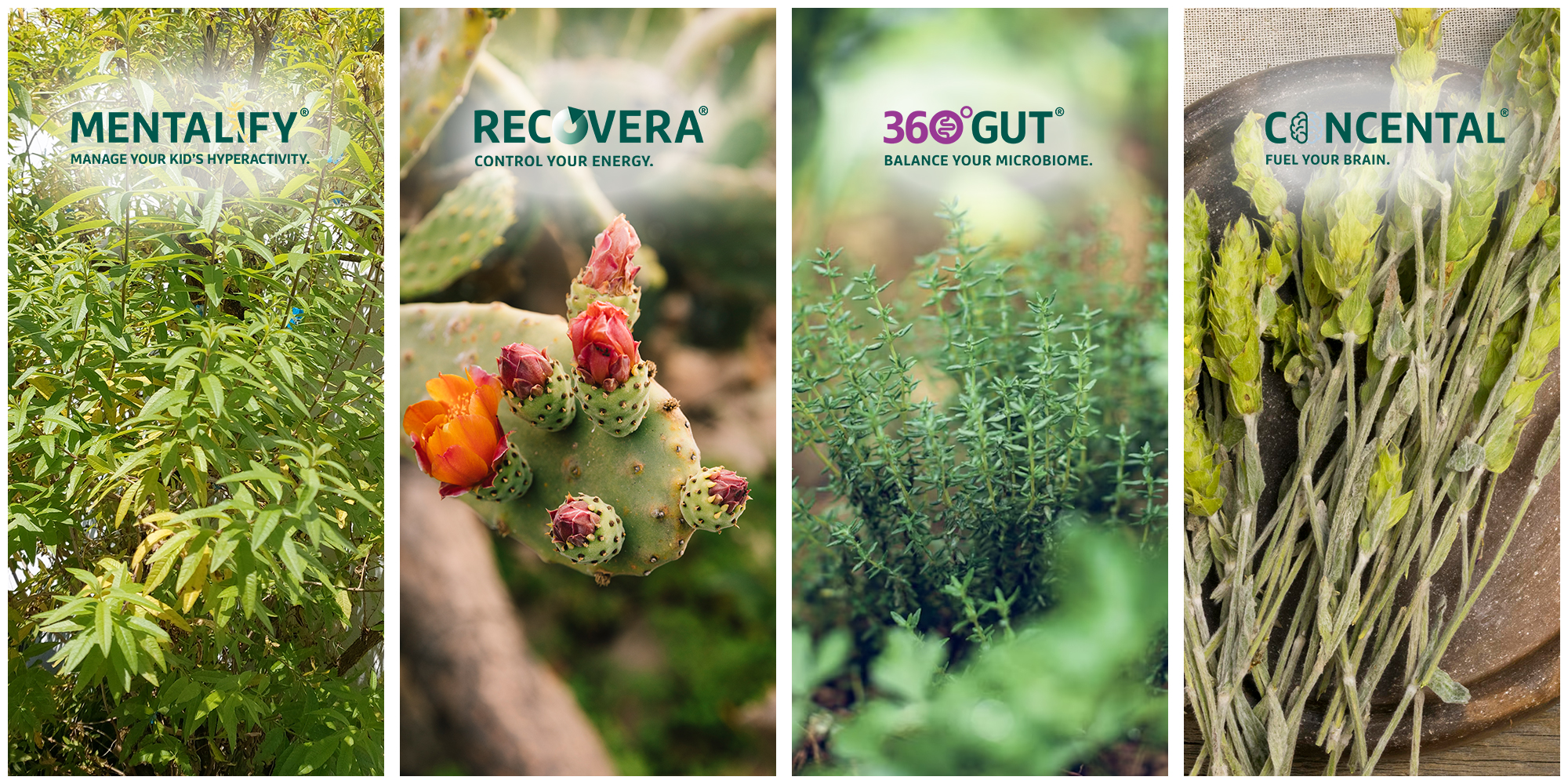
Lemon verbena (Aloysia citrodora), also known as fragrant verbena or Peruvian verbena, is an aromatic plant native to the Andean cordillera in South America. Introduced toin Europe at the end of the 18th century, it has adapted particularly well to Mediterranean regions. It is a perennial shrub from the Verbenaceae family. Its lightgreen leaves, arranged in groups of three, release a characteristic lemon fragrance when crushed, while its flowering, composed of small white flowers, extends from June to September. However, these panicles do not produce fruit in Europe. Its essential oil contains terpenoids, active compounds recognized for their action on the central nervous system.
Beyond its delicate and fresh scent, verbena is particularly recommended in cases of anxiety or stress. This plant is traditionally used to reduce nervous tension and instability, while helping to reduce irritability, agitation and nervousness in both adults and children. It is also recognized for its relaxing effect, which can also contribute to better sleep quality.
Thus, these properties make lemon verbena a plant of choice for supporting children presenting nervousness or instability, particularly when the goal is to support emotional and behavioral balance.
MENTALIFY®: an innovative verbena-based solution to help agitated children.
MENTALIFY® is a patented lemon verbena extract. This formulation is part of a targeted nutritional approach, based on a botanical active ingredient with recognized uses. The benefits associated with MENTALIFY® translate into improved attention and cognitive performance, reduced impulsivity and mood regulation. These effects can also have a positive impact on family and social relationships, by promoting better relational dynamics.
More specifically, MENTALIFY® acts by modulating several neurotransmitters activity of , notably dopamine, noradrenaline and serotonin. This action helps promote better attention and increase cognitive performance, thereby supporting overall psychological functioning. (14)
MENTALIFY® represents a natural and promising approch, standardized, patented and clinically tested. A randomized, double-blind, placebo-controlled clinical study, conducted over 56 days on 120 children and adolescents aged 8 to 17, highlighted several behavioral, emotional and cognitive benefits:
- Significant reduction in aggression as perceived by parents.
- Decrease in impulsivity reported by participants.
- Reduction in energy level from 14 days of supplementation.
- Improvement in control of impulsive reactions and concentration.
Attentional and behavioral difficulties in children have significant repercussions on their quality of life, but also on their families. In this context, a comprehensive approach appears essential, combining information, parental support and appropriate natural nutritional solutions. MENTALIFY® fully fits into this logic. Supported by scientific data, this innovative solution offers a targeted response to the challenges of emotional and behavioral regulation, based on the action of a patented lemon verbena extract.
- Santé Publique France. Santé mentale : premiers résultats de l’étude Enabee, chez les enfants de 6 à 11 ans scolarisés du CP au CM2. Juin 2023
- Ipsos. Baromètre du moral des adolescents : un jeune sur quatre fait l’objet d’une suspicion d’un trouble anxieux généralisé. Mars 2025.
- Taille et part du marché de la thérapie en ligne pour adolescents, par problème de santé mentale (anxiété, dépression, trouble déficitaire de l’attention avec hyperactivité, problèmes comportementaux), type (texte, vidéo, audio, hybride) – Tendances de croissance, perspectives régionales (États-Unis, Japon, Corée du Sud, Royaume-Uni, Allemagne), positionnement concurrentiel, rapport prévisionnel mondial 2025-2034. Février 2025.
- Anuradha B. More. Teen Health Gummies Market Research Report 2033.
- Dr Olivier COUDRON. HYPERACTIVITÉ. Décit de l’attention et Micronutrition. Santé intégrative – n°15 mai/juin 10.
- Robberecht H, et al. Magnesium, Iron, Zinc, Copper and Selenium Status in Attention-Deficit/Hyperactivity Disorder (ADHD). Molecules. 2020 Sep 27;25(19):4440. doi: 10.3390/molecules25194440. PMID: 32992575; PMCID: PMC7583976.
- Ghoreishy SM, et al. Zinc status in attention-deficit/hyperactivity disorder: a systematic review and meta-analysis of observational studies. Sci Rep. 2021 Jul 16;11(1):14612. doi: 10.1038/s41598-021-94124-5. PMID: 34272450; PMCID: PMC8285486.
- Granero R, et al. The Role of Iron and Zinc in the Treatment of ADHD among Children and Adolescents: A Systematic Review of Randomized Clinical Trials. Nutrients. 2021 Nov 13;13(11):4059. doi: 10.3390/nu13114059. PMID: 34836314; PMCID: PMC8618748.
- Richardson AJ, Montgomery P. (2005).The Oxford-Durham study: a randomized controlled trial of dietary supplementation with fatty acids in children with developmental coordination disorder. Pediatrics 115 (5) 1360-1366.
- Agostoni C, et al. The Role of Omega-3 Fatty Acids in Developmental Psychopathology: A Systematic Review on Early Psychosis, Autism, and ADHD. Int J Mol Sci. 2017 Dec 4;18(12):2608. doi: 10.3390/ijms18122608. PMID: 29207548; PMCID: PMC5751211.
- Elsadek AE, et al. Omega-3 supplementation in children with ADHD and intractable epilepsy. J Clin Neurosci. 2021 Dec;94:237-243. doi: 10.1016/j.jocn.2021.10.021. Epub 2021 Nov 5. PMID: 34863444.
- Chang JP, et al. Omega-3 Polyunsaturated Fatty Acids in Youths with Attention Deficit Hyperactivity Disorder: a Systematic Review and Meta-Analysis of Clinical Trials and Biological Studies. Neuropsychopharmacology. 2018 Feb;43(3):534-545. doi: 10.1038/npp.2017.160. Epub 2017 Jul 25. PMID: 28741625; PMCID: PMC5669464.
- Wang LJ, et al. Gut microbiota and dietary patterns in children with attention-deficit/hyperactivity disorder. Eur Child Adolesc Psychiatry. 2020 Mar;29(3):287-297. doi: 10.1007/s00787-019-01352-2. Epub 2019 May 22. PMID: 31119393
- Feistel, B et al. (2023): Extracts of Aloysia citrodora Paláu (Lemon verbena) show CNS activities by inhibition of neurotransmitter re-uptake in vitro. Conference Paper in Zeitschriftfür Phytotherapie. DOI: DOI:10.1055/s-0043-1769541
FAQ
Some children and adolescents may struggle to stay focused, manage their energy or control their impulses. These behaviors are often noticeable from childhood and can manifest at school, at home or during daily activities and play. Observing these situations, gathering parents’ accounts and teachers’ feedback, helps to better understand and support each child in their development and well-being.
The signs of a hyperactive child manifest through motor agitation, marked impulsivity and difficulty concentrating. Both at home and at school, the child may show attention problems when directly addressed, significant emotional reactivity, and sometimes a lack of sleep. These behaviors can sometimes be expressed through problematic language or a delay in certain acquisitions, impacting their daily life and social interactions.
A comprehensive approach is recommended, combining educational interventions, physical activities and nutritional support. Adapting the family environment also helps create a space conducive to calm and channeling the child’s energy. A natural approach, including a balanced diet and targeted nutritional solutions, can support attention, emotional balance and reduce agitation. Certain micronutrients, vitamins and minerals play a key role in brain function and the child’s well-being. Together, these strategies offer complementary support and allow the child to benefit from gentle day-to-day accompaniment.
MENTALIFY® offers a natural approach based on a patented lemon verbena extract, traditionally recognized for its soothing properties. This ingredient has been standardized, patented and clinically tested. It represents a promising solution for supporting children’s emotional, behavioral and cognitive balance.